
Strength & Tests
Self-assessment tests and building strength at any age.
Self-Assessment Tests
Simple tests to know where you stand. All optional, best done with someone nearby.
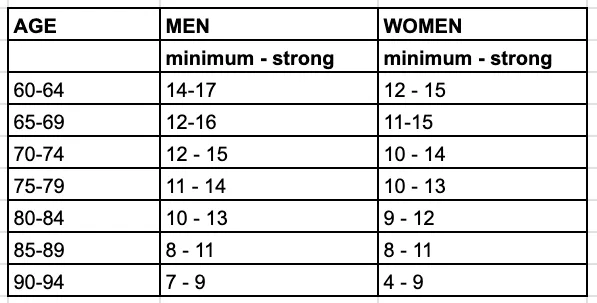
Sit-to-Stand (30 sec)
How many times can you stand from a chair in 30 seconds? Below the minimum for your age = increased risk.
Common errors: sitting too far back, knees too close together, not reaching full extension.
Rx: Stand up quickly (1 sec), sit slowly (3–4 sec), 10 per day. Too hard? Use a higher chair. Too easy? Hold a weight.

Calf Raises (30 sec)
Calves provide 70% of walking power — and it's where we lose the most power with age. For over-65s: 0–20 needs work, 20–40 good, 40–60 excellent.
Rx: Build to 3×20, fast up/slow down, 3 times per week. Progress from double-leg to single-leg.
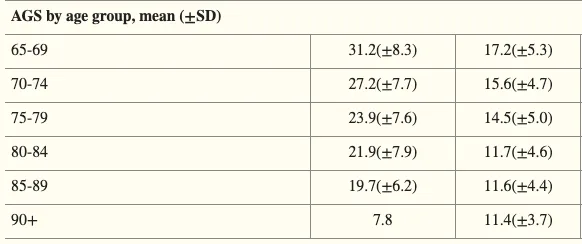
Grip Strength
One of the best predictors of overall health. Poor grip accelerates dependency. Watch for >10% difference between hands.
A 17-year Norwegian study linked weak grip to significantly higher all-cause mortality.
"After 50, we lose ~1% of muscle mass per year. But it's reversible at any age. Muscles don't know how old they are. Weak legs lead to forward bending, which leads to body sway, which leads to falls — but that chain can be broken at any link."
The Disappearing Buttocks
Your glutes are essential for hip stability, lateral balance, climbing stairs, and getting out of chairs. When they weaken, everything else compensates. Unlike your car keys, you can actually find them again.
Exercises
- Glute bridges: Lie on your back, feet flat, lift hips. Hold 5 seconds, 10 reps. Progress to single-leg.
- Clamshells: Lie on your side, knees bent, open top knee like a clamshell. 15 reps each side.
- Side-lying hip abduction: Lie on your side, lift top leg straight up. 15 reps each side.
- Standing hip extension: Hold the kitchen bench, extend one leg behind you. 15 reps each side.
- Glute squeezes: Squeeze your buttocks together and hold for 5 seconds. Do it anywhere, anytime. No one will know.
Milo's Secret
Around 500 BC, a Greek boy named Milo of Croton started carrying a calf every day. As the calf grew, so did Milo — five consecutive Olympic wrestling titles and 20 years as the greatest wrestler in the ancient world.
Progressive, incremental load. Little by little. You don't need to start with a bull. Start with what you can do today.
The L.I.F.E. Study
A landmark BMJ study compared three groups over one year:
- Lifestyle-integrated exercise (calf raises at the kettle, balance while brushing teeth)
- Structured exercise classes
- Sham control group
Both exercise groups had 30% fewer falls. The lifestyle-integrated group matched the structured group — proof you don't need a gym.
"If we don't find time to exercise, we may be forced to find time to be injured."
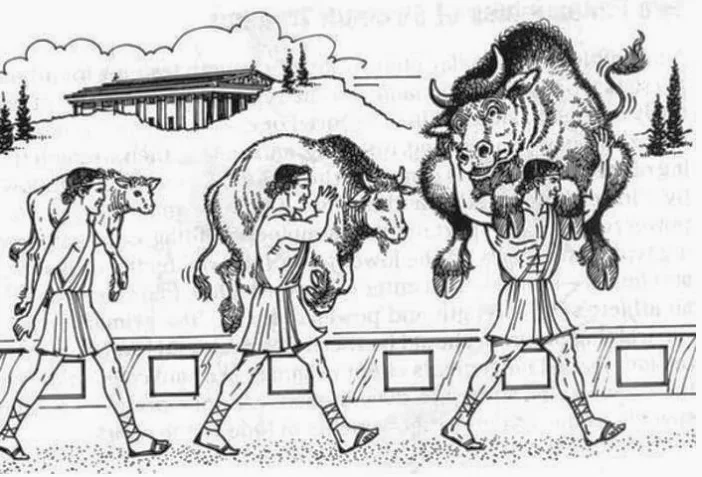
Milo of Croton
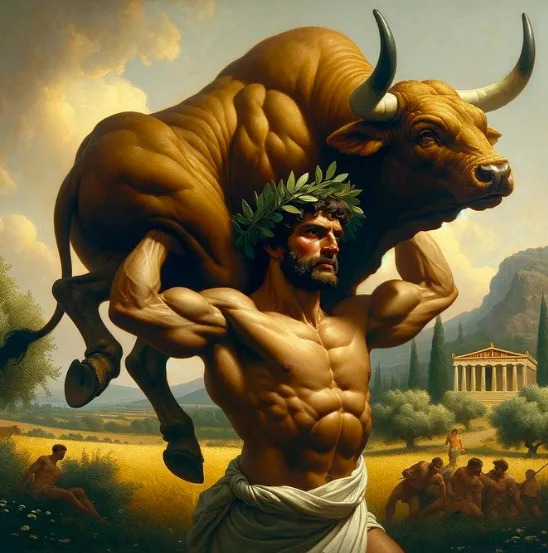
Start with the calf, not the bull
Ready to walk the talk?
Join Alan's next workshop, or book an appointment to work on your specific goals.